CHENILLE & APPLIQUÉ DIGITIZING
Metro Conference Championship Patch Chenille & Appliqué Digitizing at 21,326 Stitches
Two embroidery techniques and four thread colors run through one file without breaking the stop order that appliqué depends on. A 5-inch circular championship patch for a roller hockey league, digitized with a raised chenille fill inside an appliqué centre medallion, satin lettering, and a laurel wreath border. Six stops and twenty trims carry that sequence from the first chenille pass to the final black outline, an order that has to hold or the fabric placement never gets seated.
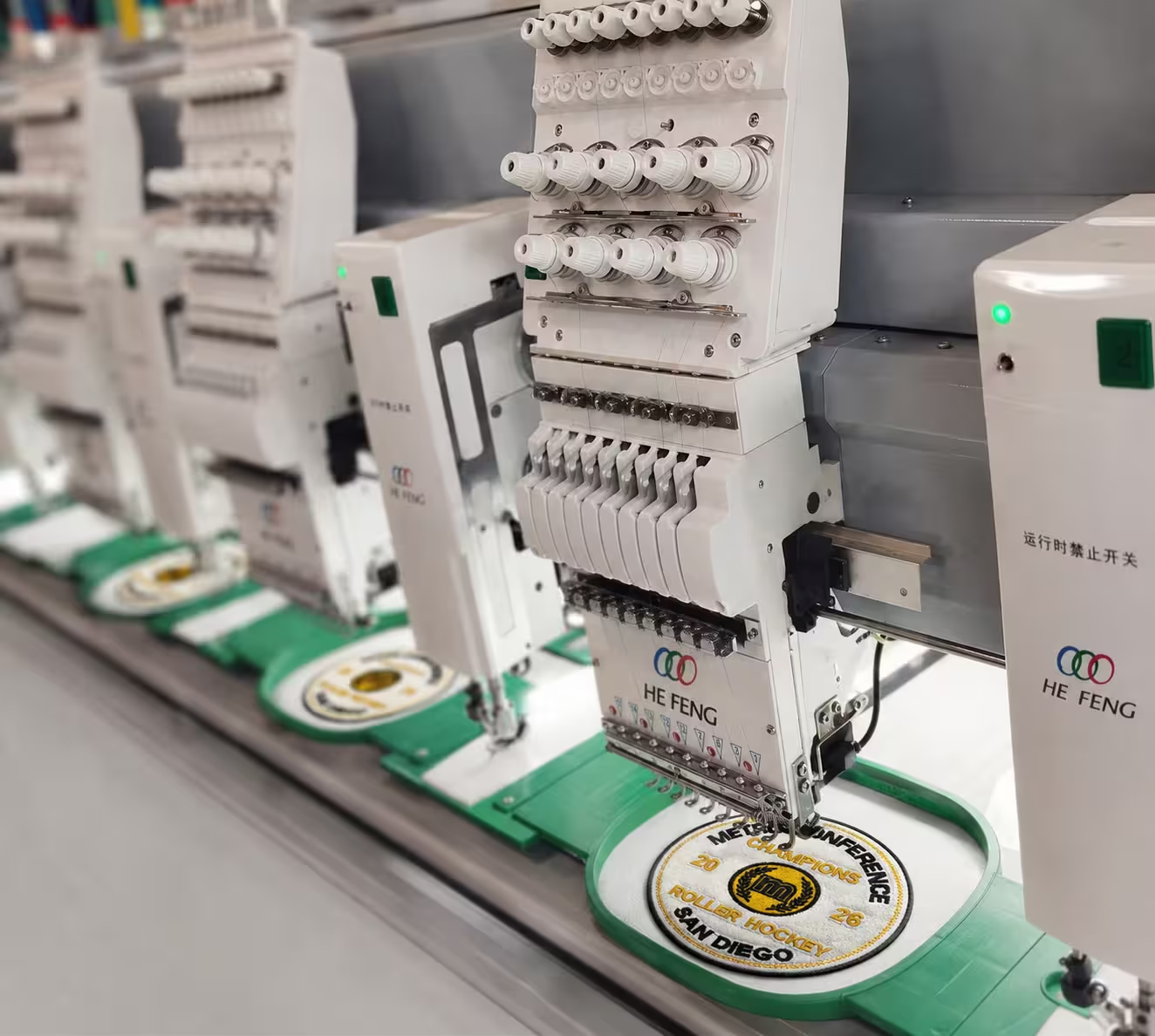
01 · Artwork receivedClean vector line art: circular border, laurel wreath medallion, arced championship lettering. 02 · Digitized file previewRendered preview showing the chenille fill texture and appliqué medallion before a single stitch runs. 03 · Production worksheetWilcom EmbroideryStudio, Level 3 Advanced: 21,326 stitches, 4 colors, 6 stops, Tajima format. 04 · Production runRunning on a multi-head Tajima-format machine, stop sequence intact across every head.
Two techniques in one file, not two files
Chenille and appliqué are both built inside the same production file, but they cannot run in one continuous pass. The centre medallion is constructed as an appliqué: the machine stitches a cutline to mark where the fabric piece sits, then stops so the piece can be trimmed to that line by hand before the machine resumes and locks the edge down. Move that stop earlier or later in the sequence and the fabric either is not tacked down yet when the trim happens, or the surrounding chenille and lettering stitch over an unfinished edge.
Six stops carrying the appliqué logic
The production worksheet runs six stops in a fixed order: a white chenille pass across the fill area, the appliqué cutline, the manual stop for hand-trimming the fabric piece, a black satin outline, the gold lettering and laurel wreath, and a final black pass that closes out the border. Each stop exists because the layer under it has to be finished, trimmed, or locked before the next one can run without lifting or shifting what came before it.
Twenty trims keep the chenille pile clean
Colour changes stay at four, but the file still carries twenty trims, points where the machine cuts and re-anchors thread between sections that are not physically adjacent, mainly between the lettering and the laurel wreath detail. That matters more on chenille than on a flat satin fill, since the raised pile shows a dragged jump stitch far more visibly than a flat surface does, so the sequencing keeps thread tails from crossing open fabric between design elements.
Specs
- Techniques
- Chenille + appliqué
- Finished size
- 5.00″ × 5.00″
- Stitch count
- 21,326
- Colors / stops
- 4 / 6
- Colour changes
- 4
- Trims
- 20
- Max / min stitch length
- 7.0 mm / 0.3 mm
- Bobbin thread
- 123.15 ft
- Thread
- Madeira Classic 40: white chenille, emerald black, gold
- Format delivered
- Tajima (DST)
- Software
- Wilcom EmbroideryStudio, Level 3 Advanced
- Pricing tier
- Portrait ($25)
- Turnaround band
- Complex (8 hour)
- Digitized by
- Chris Wendall
The full worksheet
Every number above traces back to this one production sheet: stop sequence, thread codes, and machine settings Wilcom EmbroideryStudio generated for the six-stop, four-colour build.