JACKET BACK DIGITIZING
Rolling Thunder UK Jacket Back Digitizing at 68,236 Stitches
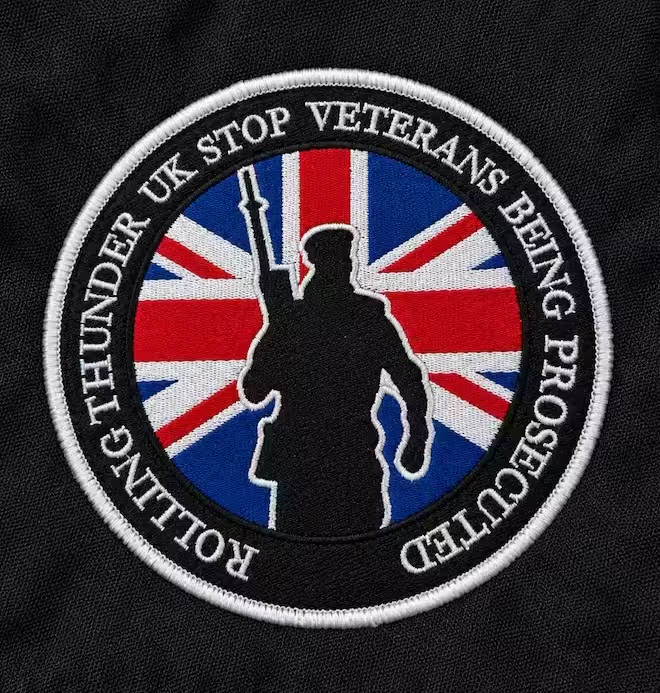
A six-stop build where the Union Jack field fills first, then the black border band, a hairline trim ring, and the “ROLLING THUNDER UK STOP VETERANS BEING PROSECUTED” lettering close the file, while the soldier’s silhouette is left as bare black twill instead of an added thread fill, so the garment itself carries the figure. A 9.70 by 9.82 inch (width by height) jacket back patch digitized in Wilcom EmbroideryStudio at 68,236 stitches, run across six stops in red, dark blue, white, grey, and black thread to keep the Rolling Thunder UK emblem clean on a jacket back placement.
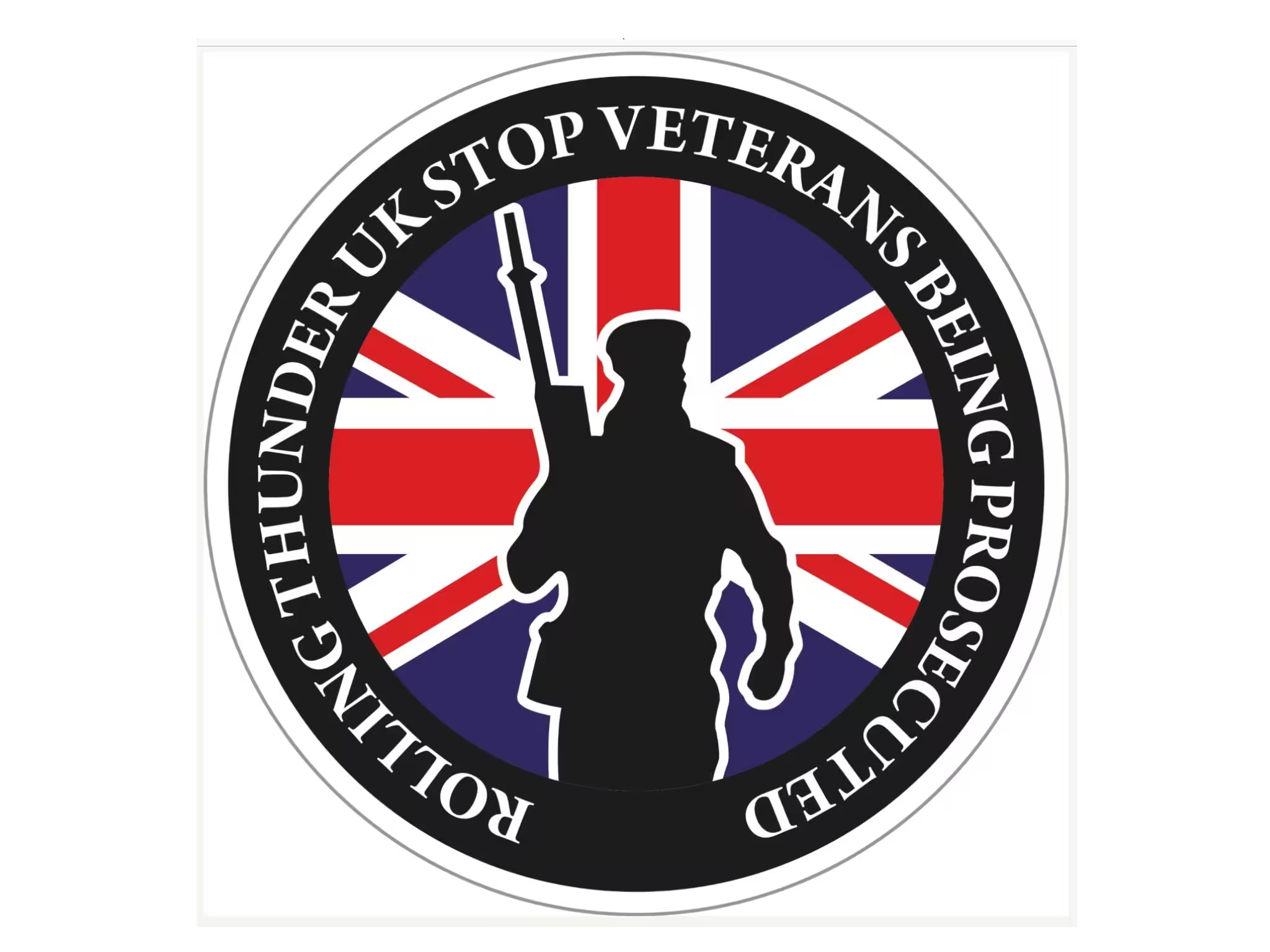
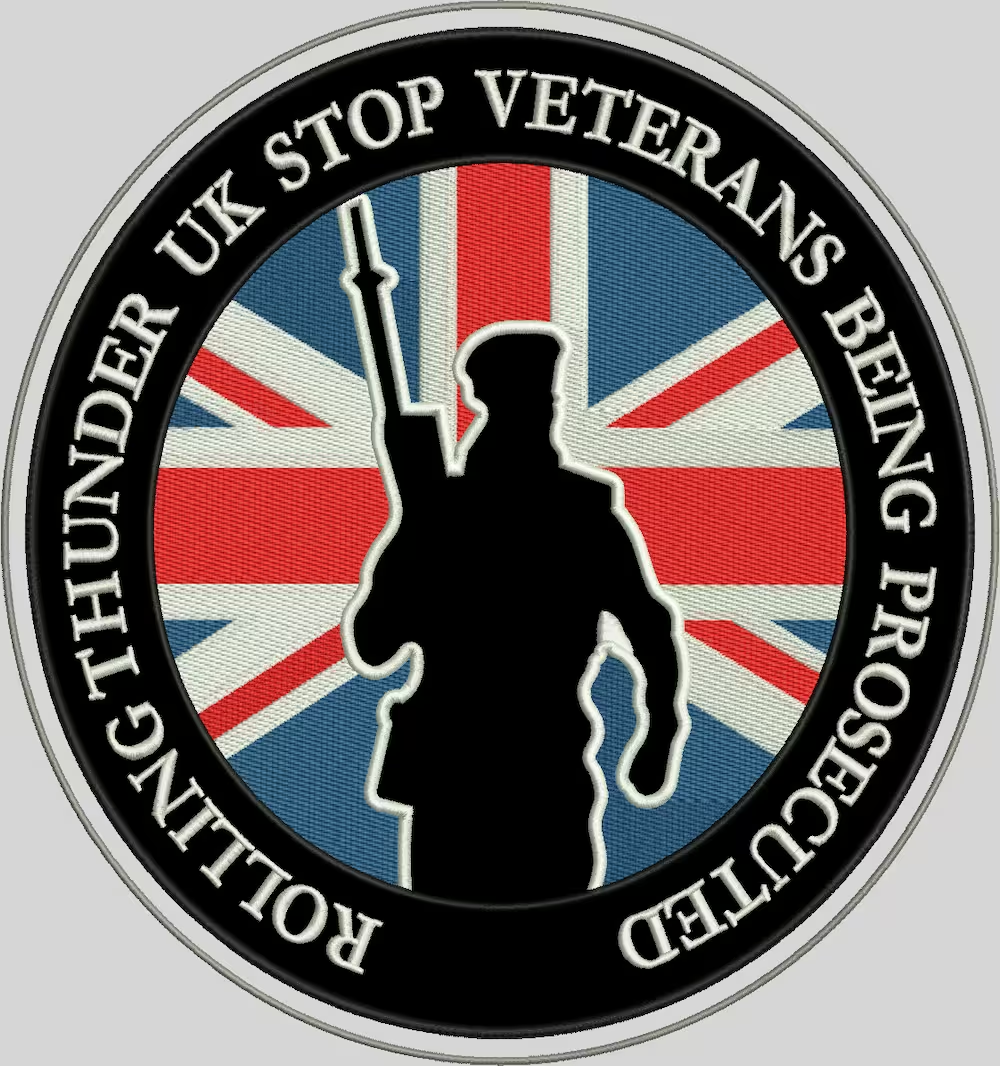
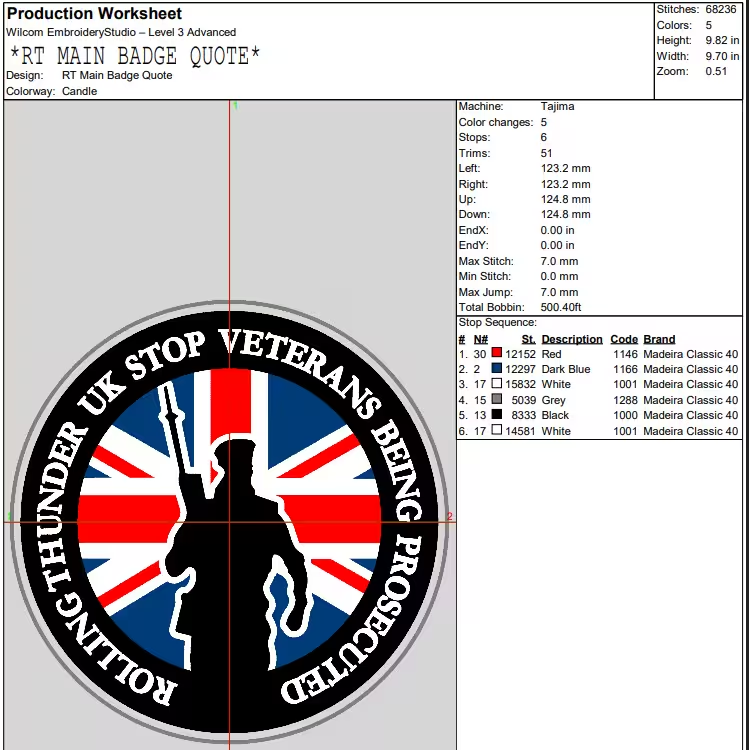
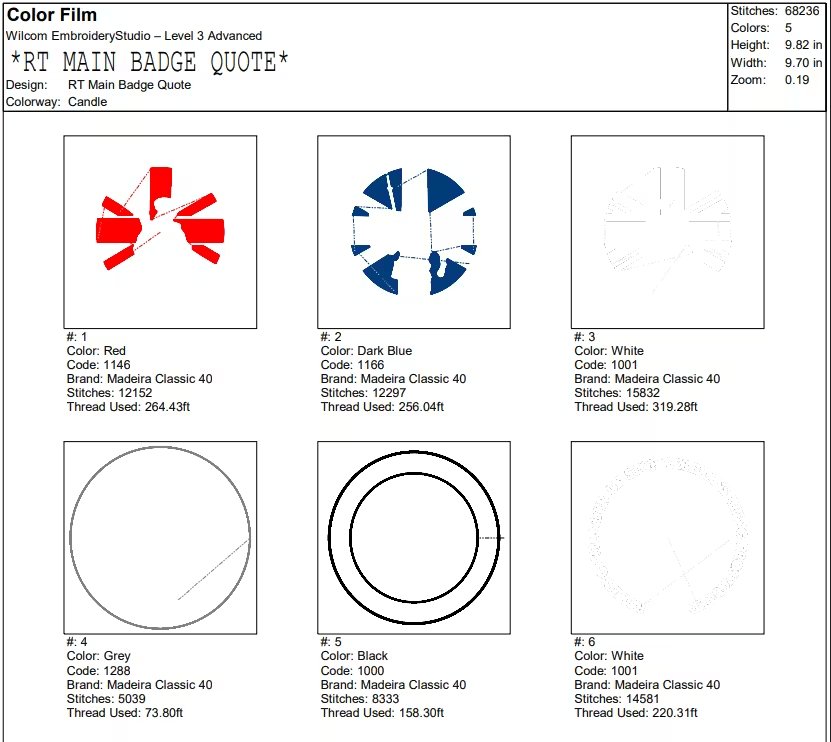
01 · Artwork receivedRolling Thunder UK jacket back patch artwork submitted for embroidery digitizing. 02 · Digitized file previewRendered preview showing how the Union Jack field, soldier silhouette, and border lettering line up before a single stitch runs. 03 · Production worksheetWilcom EmbroideryStudio: 68,236 stitches, 5 colors, 6 stops, Tajima format. 04 · Finished stitch-outThe finished patch stitched out and photographed as proof of file quality, the soldier’s silhouette carried by the jacket’s own black twill beneath the white contour line.
Union Jack field first, lettering last: the six-stop build behind the Rolling Thunder UK jacket back patch
The Rolling Thunder UK patch stitches in a planned sequence: red opens the file with the flag’s diagonal stripes, then dark blue fills the Union Jack’s navy quadrants. White follows at stop three, closing out the flag’s diagonal fimbriation and tracing the fine contour line that separates the soldier’s silhouette from the flag behind him. A grey stop runs next, a hairline trim ring set just inside the patch’s outer edge. Black closes out the wide border band that carries the text, and white returns at stop six to stitch “ROLLING THUNDER UK” and “STOP VETERANS BEING PROSECUTED” around that band. The soldier himself never gets a stitch of his own: his outline is carried entirely by the white contour line from stop three, and the black jacket twill underneath shows through as his silhouette, so no thread fill was needed to keep him solid.
5 colors, 6 stops: why white returns for the border lettering
The worksheet shows 5 colors, 5 color changes, and 6 stops. White is the only color that repeats: once as the 15,832-stitch flag fimbriation and figure outline, and again as the 14,581-stitch lettering that runs around the black border band. Red (12,152 stitches), dark blue (12,297 stitches), grey (5,039 stitches), and black (8,333 stitches) each run once. The two white stops sit on opposite sides of the file, the flag detail comes early and the lettering comes last, so the sequence returns to white rather than jumping the thread across the whole patch to reach it. That’s what turns 5 colors into 6 individual stops.
A digitized preview before a single stitch runs
Before a single stitch runs, the rendered preview shows exactly how the Union Jack field, the soldier’s outline, and the border lettering register against each other. That’s the checkpoint where placement, the curved border-text spacing, and the five approved thread colors, red, dark blue, white, grey, and black, get confirmed against the customer’s original artwork before the file moves to production. That’s what our free, unlimited revisions and preview step are for: catching any mismatch before it’s sewn into 68,236 stitches on the finished jacket back.
Specs
- Techniques
- Union Jack field fill, black border band with lettering, negative-space silhouette
- Finished size
- 9.70″ × 9.82″
- Stitch count
- 68,236
- Colors / stops
- 5 / 6
- Color changes
- 5
- Trims
- 51
- Max / min stitch length
- 7.0 mm / 0.0 mm
- Max jump
- 7.0 mm
- Bobbin thread
- 500.40 ft
- Thread
- Madeira Classic 40 (red, dark blue, white, grey, black)
- Format delivered
- Tajima (DST)
- Software
- Wilcom EmbroideryStudio – Level 3 Advanced
- Pricing tier
- Full Size ($60)
- Turnaround band
- Complicated jacket back (12 hour)
- Digitized by
- Gerald Wuestewald
The full worksheet
Every number above traces back to these two production sheets: the stop sequence and machine settings Wilcom EmbroideryStudio generated for the six-stop, five-color build, plus the color film breaking each stop out by shape.